Industries | Health
When software becomes a life saving tool





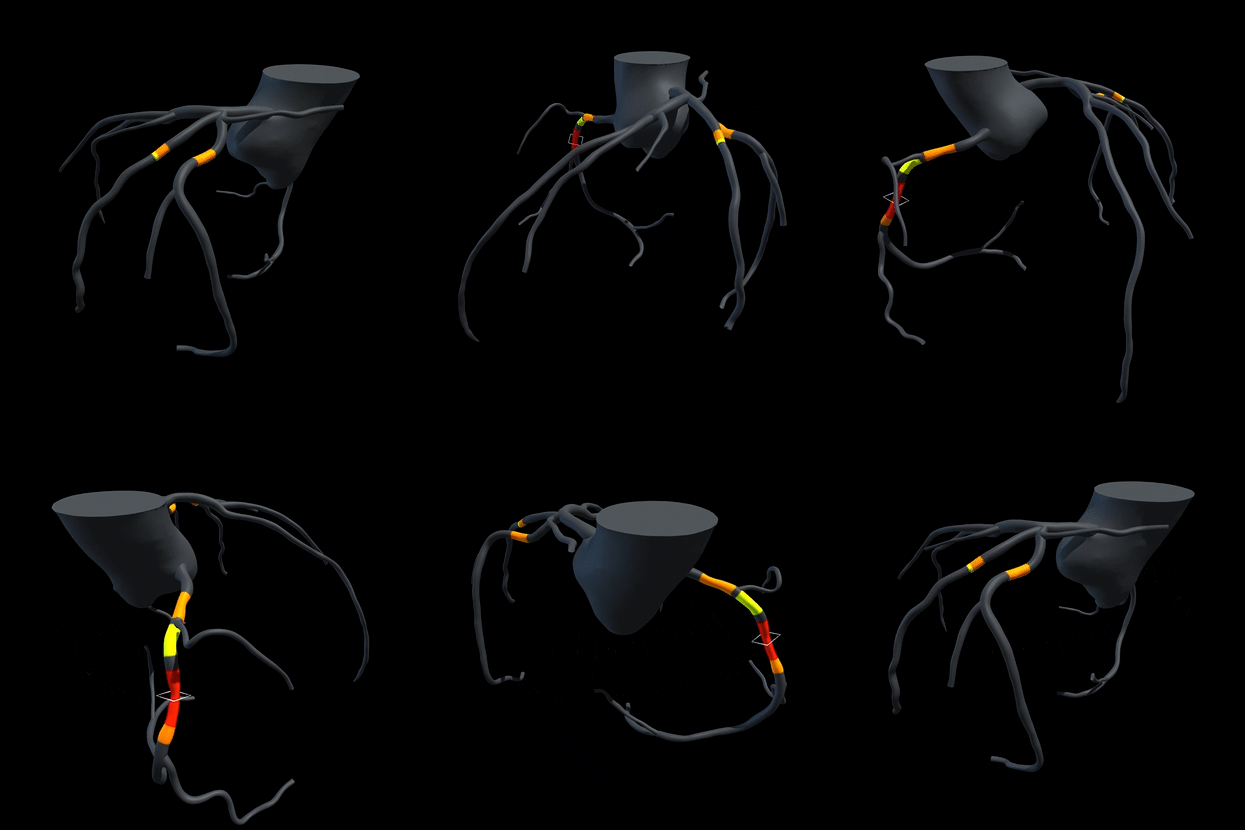

In most industries, bad software is an annoyance. In health, it can be a delayed diagnosis, a missed detail or a clinician who stops trusting the tool in front of them. Any health related information is sensitive, so we know that the ownership and protection of our clients data is of the utmost importance. We’ve spent years in this world, building products for clinicians, patients and the people who support them. Here are some of the problems we’ve solved.
Some of our health work

Taking AI-powered heart disease detection from research to a regulated product
Artrya set out to speed up the diagnosis of coronary artery disease, which affects around 126 million people worldwide. We worked as an extension of their team to turn a research prototype into Salix, a browser-based product that reviews CT scans with AI. It reached the Australian Register of Therapeutic Goods and supported Artrya’s ASX listing, which raised over $40m.

Connecting patients and practitioners, simply
Healthengine, Australia’s largest consumer healthcare platform, wanted fresh thinking on how to connect people with the right practitioner as more care moves online. We joined their team and went from problem statement to concept to design in one week.

Helping aged care workers meet reform standards, securely
As aged care reform shifted focus to support at home, Keep Able needed a platform to equip providers and support workers with tools, training and resources. We designed and built an accessible, secure site hosted in Australia, tested with 50 care professionals and penetration tested before go-live.
Challenge 1:
Clinicians don’t have time to wait

The problem:
In diagnostics especially, the software is part of a time-critical workflow, and a slow product isn’t just irritating, it doesn’t get used. Medical imaging makes this harder as large files have to be stored, loaded and rendered quickly, accurately and reliably.

How we’ve solved it:
Salix is browser-based, which has real advantages: no upfront capital expenditure, and nothing to install. The accepted view was that web software couldn’t match hardware-dependent solutions for speed. Alongside Artrya’s team, we refactored Salix’s browser-based approach until its performance reached real-time responsiveness. It also integrates with existing systems to optimise clinical workflows which means that clinicians will be armed to make a fast and accurate diagnosis, guiding patients to optimal preventative therapy in a timely manner.
Challenge 2:
There is zero room for error

The problem:
Clinicians and patients alike rely upon the software we build to diagnose, and assist people to find medical assistance. This means that what we built needs to be accurate, within regulations and testing has to be rigorous as there’s no room for surprises on release day.

How we’ve solved it:
For Artrya, we worked as a full product team (design, development, product management and testing) alongside their researchers, building to a plan shaped by early clinician feedback. Every feature and release went through rigorous testing, with continuous smoke testing during development, supporting Artrya’s regulatory submissions. Salix is now listed on the Australian Register of Therapeutic Goods.
We also designed for growth. As Artrya went from a tiny founding team to a listed company, we flexed with them, bridging capability gaps and supporting new starters as the team grew.
Challenge 3:
Sensitivity of medical data

The problem:
Health data is among the most sensitive there is, and in Australia, where it lives and who can reach it matters. The security of a product in healthcare needs to be considered from the start.

How we’ve solved it:
For Keep Able, we architected a content schemas that met requirements for security and compliance for Australian data hosting. Payload’s defining feature is its code-first approach, tailored to create a fully custom headless CMS experience.
We also engaged with independent penetration testers at CyberCX who reviewed the platform, and gave us recommendations that we implemented before go-live. This enabled us to create a secure platform for Keep Able, and they know where their data is being kept.
Challenge 4:
You have to build for everyone

The problem:
Health products serve a wide range of people: clinicians, carers, patients, support workers, many of them under pressure or working with varying levels of comfort with technology. Good design has to meet them where they are, and be understood by anyone, anywhere.

How we’ve solved it:
For Keep Able, we tested a mobile prototype with 50 aged care professionals from across Australia, and used what we learned to shape the site’s information architecture and the way content connects. We designed to WCAG 2.1 AA accessibility standards from the start, rather than retrofitting.
For Healthengine, the question was how to connect people with the right practitioner in a simple, accessible way, and how to help ensure professional and personal fit. Working closely with their founders and growth team, we moved from problem to design in a week.
What ties it together: building for a need
Artrya, Healthengine and Keep Able are very different products, but each is the real thing: software people rely on, that serves a purpose beyond itself, and has to perform when it counts. That’s what we’re good at. We treat what we build as a product, not a project: we test it, harden it, and stay with it as it grows.

“What stands out is how well they work with us, seamless like an extension of our own team. Their regular presence on-site makes communication easy and has built a strong sense of teamwork, and they have no qualms working with our other vendors.”- Chris Botman, formerly Software Development Manager at Artrya